
How Does Flex PCB Fabrication Improve Circuit Flexibility?
In modern electronics, circuit flexibility is crucial for the miniaturization of devices and their ability to fit into complex, space-constrained environments. Flex PCB fabrication is a key technology that enables this flexibility, offering numerous advantages in designing circuits that need to bend, fold, or conform to various shapes without compromising performance. This unique capability of flex PCBs makes them ideal for applications in industries such as wearable devices, medical equipment, automotive, and consumer electronics. But how exactly does flex PCB fabrication improve circuit flexibility, and what makes this possible?
The Role of Materials in Flex PCB Fabrication
At the core of flex PCB fabrication is the use of flexible base materials, such as polyimide, polyester, or other flexible polymers. Unlike traditional rigid PCBs, which use fiberglass or other stiff materials as their substrate, flex PCBs are designed with a material that allows the board to bend and twist without causing damage to the circuit. These flexible substrates are thin and durable, with a high tolerance for bending and stretching, making them perfect for circuits that need to endure repeated mechanical stresses. By choosing the right flexible material during the fabrication process, manufacturers ensure that the circuit will retain its integrity even when subjected to dynamic movements.
Layering and Design Considerations
One of the unique aspects of flex PCB fabrication that enhances circuit flexibility is the ability to layer the PCB in a way that allows it to bend without creating weak spots. Flex PCBs can be designed with one or more layers, where each layer is carefully laminated to provide mechanical support and flexibility. In multi-layered flex PCBs, the layers are bonded together in such a way that the flexibility of the substrate is maintained while still providing a robust electrical pathway for signals and power. The design also allows for optimal routing of the circuits, ensuring that the flexible design does not compromise the electrical performance of the PCB.
Reduced Size and Lightweight Construction
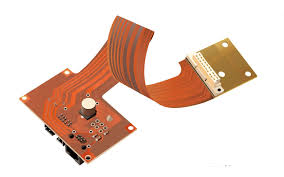
flex pcb fabrication allows for the creation of smaller, lighter, and more compact circuits compared to rigid PCBs. By utilizing flexible substrates and efficient routing techniques, flex PCBs can be designed to fit into tight spaces and wrap around other components without adding unnecessary bulk. The reduced size and lightweight nature of flex PCBs are essential for applications like wearable devices and portable electronics, where space and weight are limited. This also leads to improved circuit flexibility, as smaller components can be interconnected with flexible traces that can conform to the device’s shape, such as wristbands or curved displays.
Enhanced Durability and Mechanical Stress Resistance
While traditional PCBs can break or crack under mechanical stress, flex PCB fabrication allows the circuit to maintain its performance even when bent or flexed repeatedly. The flexible nature of the PCB is specifically engineered to handle mechanical stresses, such as bending, twisting, and stretching, without damage to the copper traces or solder joints. This makes flex PCBs perfect for applications where traditional PCBs would fail due to constant motion or vibration, such as in automotive electronics, medical devices, and industrial machinery. The ability of the flex PCB to bend and adapt to different shapes without compromising its mechanical integrity is a significant advantage for improving circuit flexibility.
Efficient Signal Integrity in Flexible Designs
Maintaining signal integrity in flexible circuits is another critical aspect of flex PCB fabrication. Flex PCBs are designed with the same electrical properties as rigid PCBs, ensuring that the signal transmission remains stable and reliable even when the board is flexed or bent. With precise design and fabrication techniques, flex PCBs can be manufactured to minimize noise, interference, and loss of signal strength, even in high-density designs. The use of advanced materials and manufacturing processes ensures that the flexibility of the PCB does not interfere with its electrical performance, making it possible to achieve high-speed signal processing in flexible, space-saving designs.
Versatility in Complex Geometries
One of the key ways flex PCB fabrication improves circuit flexibility is by allowing the design of PCBs that can conform to complex shapes or be integrated into three-dimensional geometries. This is particularly important for applications in compact devices or products with curved or non-flat surfaces, such as flexible displays, hearing aids, or foldable smartphones. By creating a flexible circuit that can be molded or bent into different configurations, designers can integrate the PCB directly into the device, saving valuable space and reducing the overall size of the product. The versatility of flex PCBs also allows them to be used in applications where a rigid PCB would be impractical or impossible to incorporate.
Conclusion
In conclusion, flex PCB fabrication is an essential technology for improving circuit flexibility in modern electronic devices. Through the use of flexible materials, multi-layer design techniques, and efficient routing, flex PCBs enable circuits to bend, fold, and conform to various shapes without sacrificing electrical performance or durability. The ability to create compact, lightweight, and highly flexible circuits makes flex PCBs ideal for applications in industries such as wearables, automotive, medical devices, and consumer electronics. As the demand for smaller, more adaptable electronics continues to grow, flex PCB fabrication will remain a key enabler of innovation in flexible circuit design.

