
certifications do flexible printed circuit manufacturers have
In the electronics industry, flexible printed circuit boards (PCBs) offer unparalleled design flexibility. Whether they’re used for connecting components in a handheld device or providing power and signals to an industrial machine, they can take different shapes and wrap around cylindrical surfaces. In doing so, they provide engineers and designers with the freedom to create truly innovative products. While flex PCBs have many advantages, they’re not without their challenges. The question of how do flexible printed circuit manufacturers handle custom orders is a complex one.
The most important thing to keep in mind when working with a reputable flexible printed circuit manufacturers is to make sure that they provide you with a prototype of your circuit board before production begins. This way, you’ll have the opportunity to make changes before committing to mass production. This will help ensure that the final product matches your vision and design requirements, ensuring a high-quality finished product.
A flex circuit is typically made from copper foil, although other metals such as nickel and silver can also be used. For the most part, however, copper is the preferred metal for flex PCBs due to its excellent balance of cost and physical and electrical performance attributes. The copper is laminated to an insulating base material such as polyimide film or FR4. The conductive paths are then etched into the substrate using a suitable etching process.
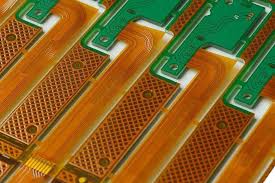
What certifications do flexible printed circuit manufacturers have?
Once the conductive pathways have been etched into the substrate, a photomask is placed over the board and UV light is applied. The portion of the photomask corresponding to the wiring pattern is cured and then removed. The uncured photoresist is then removed using a chemical solution.
Depending on the PCB’s design, it may be necessary to add holes to the copper layer. Fortunately, modern technology makes it possible to create small holes that are well-suited for flex PCBs. These holes can be plated with gold, palladium, or nickel.
For a flex circuit to be successful, it must be able to bend as needed while still maintaining its integrity. To achieve this, the flex circuit must be properly designed to minimize the amount of copper in the area that is subject to the greatest bend radius. This can be done by either making the traces as short as possible or by using cutouts to reduce the thickness of the flex.
When a flex circuit is ready for assembly, it’s first placed on a jig to perform an electrical test. This test will confirm that all the circuits and components are working correctly. During this stage, skilled experts will also visually inspect the flex circuits for contaminants or scratches. If they find any defects, they will correct them before the flex circuit is sent out for customer use. This is a vital step in the manufacturing process as it ensures that the flex circuit will function as intended once it’s deployed. A failure to conduct thorough testing could result in product failures that will impact brand reputation and revenue.

